How to Convert Website Visitors into Customers or Clients (For Actual Growth!)
Getting website visitors is exciting... until they don't take action. In this article, I'm sharing how to convert website visitors into customers or clients so you can actually grow your business and earn more money.
I recently attended a webinar on why more website traffic won't fix your growth problem, and it got me thinking about what I've been seeing for my own business and for my clients. I've worked as an SEO writer and consultant since 2019, and one of the biggest shifts I've noticed is that organic traffic isn't what it used to be.
Websites are now competing with AI tools and AI overviews for attention. But there’s good news with this. The visitors who do make it to your site are usually more qualified, which should lead to higher conversions. The problem is that most websites aren't set up to convert.
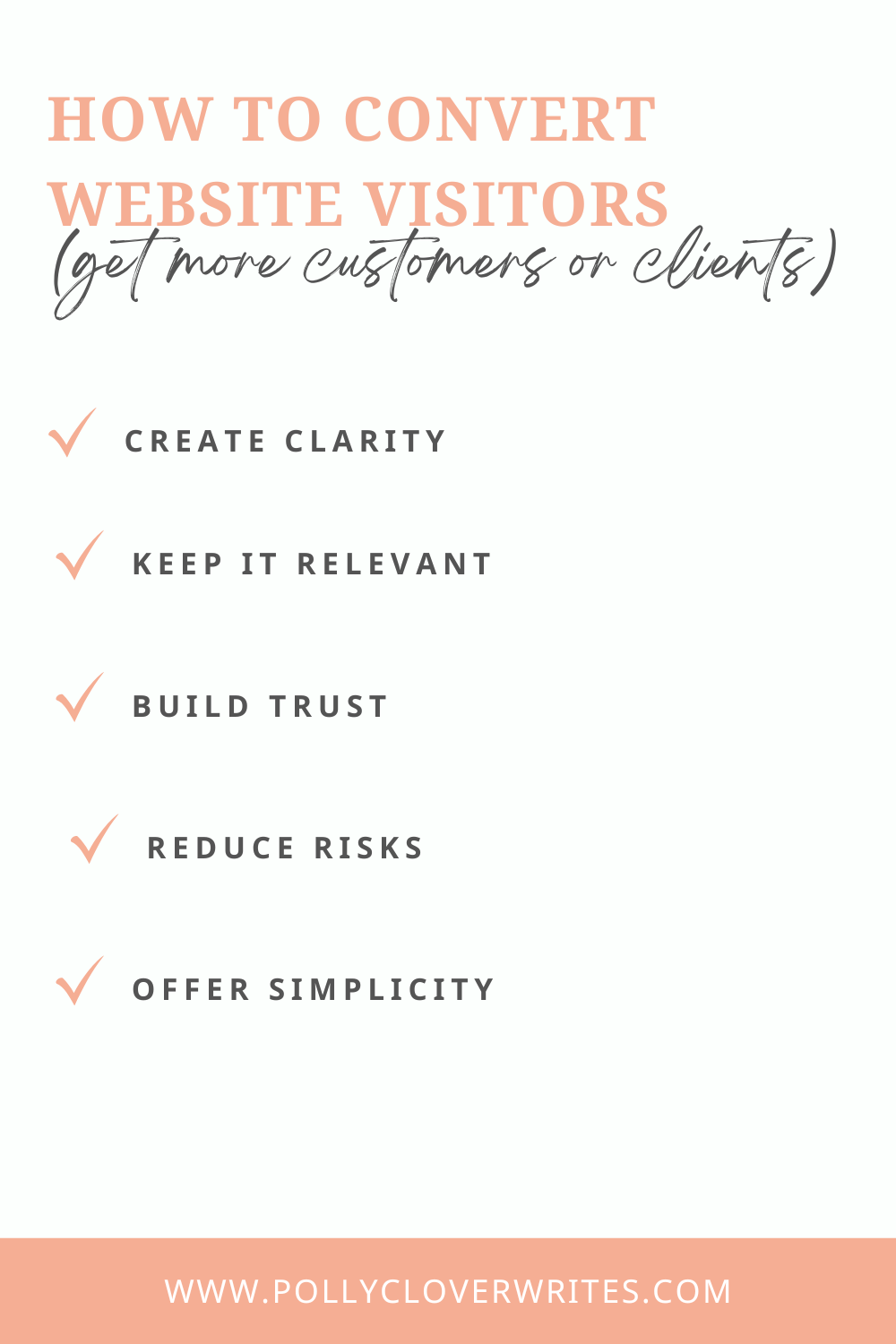
The most practical and helpful ways to get your website visitors to take action are through clarity, relevance, trust, risk reduction, and simplicity. Below, we’ll explore exactly how to do each of these with helpful examples you can actually implement for your own site.
Why You Might Not Need More Website Traffic
If you're getting at least some website traffic, volume might actually not be the issue. Instead of cranking out a ton of content or sharing your site with more people, focus on converting the visitors you're already getting.
This isn’t to say traffic isn’t important. It is. But many businesses prioritize traffic and not conversions. Both are key to any business growth strategy.
Converting Website Visitors: What You Need to Prioritize
Create Clarity
Your website should make it clear what you do, who you help, and how you help them — all within a few seconds. This is especially important for your home and about pages.
Many websites are filled with fluffy content and catchy wording. While this can be fun, it’s not necessarily inspiring people to take action. Most of us are in a rush to gather information, so if your website visitors have to dig for the details, they’re probably going to leave.
A quick test: Ask someone unfamiliar with your business to look at your website for five seconds, then tell you what you do. If they can't, your messaging needs work. This is why I ask every new client to tell me what they do, who they help, and how they do it.
Keep It Relevant
When you try to speak to everyone, you speak to no one. Each page on your site should be specific and relevant.
This is especially important for service or product pages. If you have multiple offers, give them each an individual page. Many successful websites have an overview page that links out to specific pages for each offer.
For example, I recently helped ARA Mental Health Counseling rewrite her website copy. Instead of one general therapy page, we created three separate pages: grief counseling, pet loss, and life transitions. Each page speaks directly to that audience’s experience, which helps them feel seen, understood, and in the right place.

Create Trust
Nearly 90% of consumers say positive reviews make them more likely to use a business, so creating trust is essential for converting website visitors.
So even if your website is beautifully designed and incredibly well written, trust factors are a must. These can include:
Reviews and testimonials - Feedback from past clients or customers, ideally with names or businesses attached, so it feels credible
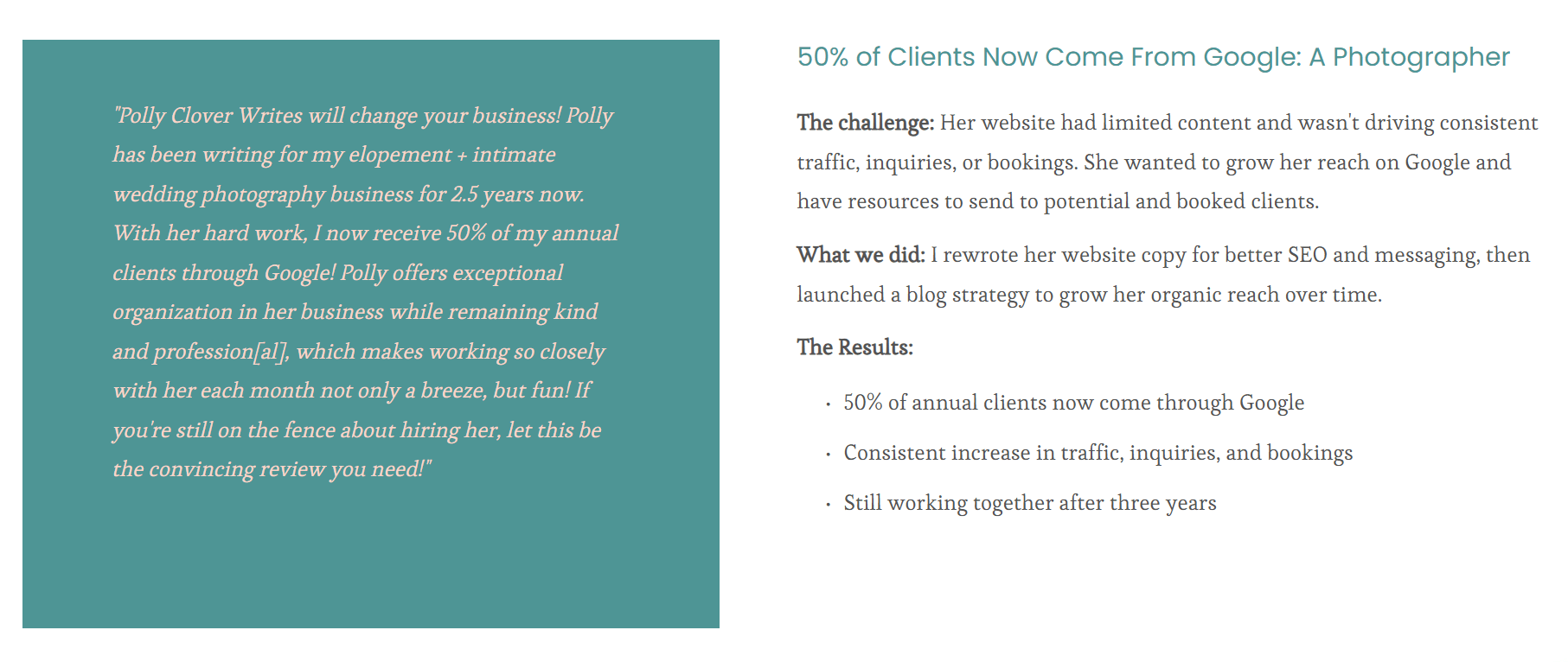
Case studies - Specific examples of results you've helped clients achieve, with numbers if possible
Brand authority - Logos of past clients, media mentions, certifications, or years of experience that show you're established
If you’re a new business, it can take time to create trust factors to share on your website. Start where you can, and grow from there.
Here’s an example of how I build trust with prospective clients on my website copywriting services page:
Reduce Risks
People hesitate when a decision feels risky, expensive, or difficult to undo. Often, when website visitors don’t convert, it’s because you need to lower the barrier for someone to say yes to your offer.
A few ways to reduce that risk include:
Guarantees - A money-back or satisfaction guarantees remove the fear of wasting money
Low-commitment entry points - Free trials or lower-tier offers let people test the waters before fully committing
Flexible contracts - Month-to-month options may feel safer to new clients than long-term commitments
Transparent pricing - Sharing your rates upfront builds trust and saves everyone time
Not every option here will fit your business, so pick what makes sense for you. On my own service page, I share pricing upfront for every offer. I also have three tiers for my signature blog management service, so people can choose the option that feels right for them.
Offer Simplicity
Have you ever landed on a website that felt incredibly overwhelming? Tons of pop-ups, multiple videos, moving text, or a cluttered page. All of this can take negatively impact your website marketing strategy and take away from what you’re selling.
Here’s how to keep things simple and impactful:
One clear CTA per page - Multiple calls to action, especially placed near each other, create decision fatigue. Pick one goal per page and design around it.
Fewer form fields - Only ask for what you actually need. Every extra field is a chance for someone to abandon the form.
Easy navigation - A cluttered menu with too many options makes it harder for visitors to find what they came for.
Simple colors and fonts - Stick to two or three brand colors with good contrast. And choose one or two fonts that aren’t too decorative or stylized.
How to convert website visitors into customers or clients: FAQs
What's a good website conversion rate?
The global average website conversion rate is 2.35%, while the top 10% of sites convert at around 11.45%. Anything above 3% puts you ahead of most websites.
How do I convert more website visitors into customers?
Focus on clarity, relevance, trust, risk reduction, and simplicity. Make your offer(s) obvious, speak to a specific audience on each page, create trust, lower the risk of saying yes, and don't overwhelm visitors when they land on your site.
Does more website traffic mean more customers?
Not always. More traffic can help, but a website built to convert the visitors you already have can make a bigger impact than growing your traffic numbers alone. It’s important to remember that every growth strategy includes both traffic and conversions.
How soon will I see results from conversion optimization?
It depends on your starting point. If you're already getting good traffic, small changes like a clearer headline, social proof, or simpler forms can show results within a few weeks. With smaller traffic numbers, it may take longer to see the impact.
Get Support Converting Website Visitors Into Customers or Clients
A website that converts requires copy that's clear, specific to your audience, and created around what gets people to say yes. And this is how you actually grow your business.
I know this can feel overwhelming to do alone, which is exactly where I come in. I write website copy and blog articles designed to bring both traffic and leads. Reach out if you’d like support, and let's chat about what your site needs.