Should I Start Blogging? What To Know Before You Begin
Wondering, "Should I start blogging?" Probably, but it depends on your goals and where you’re at with your business.
Blogging can be one of the most effective strategies for getting consistent website traffic — whether you want to grow your business or earn an income as a blogger.
As an SEO writer and consultant, I’ve worked with over 200 brands to improve their blogging efforts for more website visitors and leads. In this article, I'll cover what blogging can do for your website, signs you’re ready to to start, and what you need to get going.
Is blogging still worth it in 2026?
Yes, blogging is still worth it. But how people find and consume content has shifted, and it helps to understand that going in.
AI tools like ChatGPT and Google's AI Overviews now answer questions without people clicking through to websites. That said, people who want detailed information from a trusted expert or are closer to making a purchase or booking a service are still visiting websites.
In 2026, marketers ranked blogging and website SEO as the highest ROI marketing channels. Blogging also helps me and my clients get more organic website visitors, email subscribers, and sales.
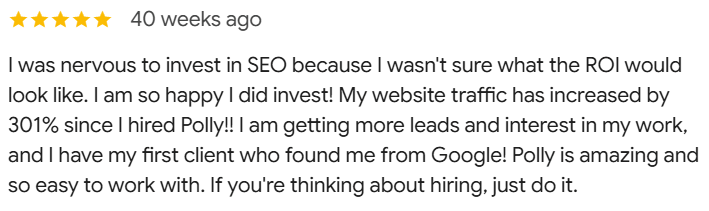
Last year, I helped one client improve her overall SEO strategy and start a blog, and she saw a 301% increase in website traffic. Since then, she's also started getting clients who found her through her blog articles 🎉
What Blogging Can Do For Your Website
When you start blogging, here’s what can happen for your website:
More visibility - Every new post gives Google and AI tools more content to index and more opportunities to show your website to the right people.
More credibility - Fresh, helpful content signals to Google that your site is active and worth sharing with your target audience
Longer visits - When visitors find useful information on your site, they stick around longer. This can motivate them to take action and also sends positive signals to search engines to send more traffic your way.
24/7 marketing - A blog builds a library of content that works for you around the clock, bringing in leads without you having to do anything extra.
Reasons to Start Blogging
People can find you on Google and AI
Each blog post targets a topic your audience is searching for. When someone Googles a question you've answered, your article has an opportunity to show up and bring new visitors to your site. AI tools also pull from blog content when answering questions and often link back to the source (aka your website).
Build trust with your audience
A blog lets you share your knowledge before someone is ready to buy. When people find helpful, well-written content on your site, they start to trust you. That trust makes them more likely to reach out or purchase when they're ready.
Tip: Pair your blog with an email list. Add opt-in forms across your site so you can stay in touch with readers who aren't ready to buy yet — and be top of mind when they are. I have at least one email sign-up form on every page of my site, which has helped me get over 2,000 subscribers.
Create content with a long shelf life
A social media post usually only gets traction for a day or two, which is why I prefer blogging over Instagram and other platforms. Articles that stay relevant over time are evergreen and can continue bringing in traffic for years. For example, I have articles I wrote years ago that still get traffic — I simply update them once a year to keep them fresh.
Have content to share on social media
Blogging gives you a constant source of content to share across other platforms. One article can become several social media posts, an email newsletter snippet, or even a podcast topic. Starting a blog can make your overall content strategy easier to maintain.
Blogging positions you as an expert
When you have a library of helpful blog content, your audience can see you as an expert in your field. Helpful, consistent articles build credibility that sets you apart from competitors who aren't blogging.
One of my clients recently landed a new customer who found a single article, binged several more, and reached out ready to buy — all before they ever spoke.
Signs You’re Ready to Start Blogging
Before you begin your blogging journey, it’s important to make sure you and your business are ready. Here are some things to consider when starting a blog to maximize your results.
Your website is ready to go
Your blog lives on your website, so you want to make sure the copy on your main pages (home, about, and services/products) is up to date and clear. Your site should also be easy to navigate and tell visitors what to do next — whether that's booking a call, joining your email list, or something else. When your whole site is set up well, it encourages blog readers to stick around, explore, and take action.
You know your audience and what they need
For blogging to be successful, you need to know exactly who you’re writing for and what they need help with. Ask yourself:
Who usually buys from/works with me?
What goals and problems do my clients/customers often have?
What does my target audience want to learn more about?
You're committed to the process
Blogging is a long-term strategy, and results don't happen overnight. It took me about six months of consistent blogging to start seeing solid traffic, and another six months for leads to start coming in. Most of my clients have also had similar experiences.
That said, blogging works best when it's consistent and intentional, not random or sporadic. A publishing schedule of at least one monthly article signals to Google that your site is active and helps you build an audience over time. If you need support staying consistent, consider outsourcing you’re blogging strategy.
What You Need To Start Blogging
Here are the essentials to get started:
A website you own - A blog needs to be on a website. Any website platform can host a blog, but Squarespace is my favorite if you’re looking for an inexpensive, user-friendly option.
An understanding of your audience - Know who you're writing for, what questions they have, and what problems they're trying to solve. This helps guide your blog content.
A list of topics your audience is actually searching for - This is where keyword research comes in. Instead of guessing what to write about, a keyword tool helps you find topics people are actively searching for. I love Keysearch for this — it's affordable and easy to use.
A basic understanding of SEO - You don't need to be an expert, but knowing how to write and structure content so Google can find it makes a big difference. This is exactly what my SEO blogging course covers.
Should I start blogging? FAQs
How long does it take to see results from blogging?
Most websites start seeing results from blogging within three to six months of publishing consistent, SEO-friendly content. Meaningful traffic and leads can take a little longer but tend to continue building over time.
Are blogs still a thing in 2026?
Yes. Many people still read blogs, especially when they're looking for detailed information or want to hear from someone with firsthand experience. I actively blog for my own business and continue to help clients build their blogging strategies in 2026. It's still very much a relevant and effective tool.
What should I write about?
You should write blog articles about your target audience’s problems and goals. Consider what people ask you most about. From here, do keyword research using a tool like KeySearch to find specific phrases with search volume so your articles have the chance of being found.
How often should I blog?
To start seeing meaningful results, I recommend blogging two to four times monthly. However, the best blogging frequency depends on your goals, niche, and bandwidth.
Should I start blogging? Next Steps
If you’re ready to improve your website visibility for more traffic and leads, blogging can be well worth it. I’ve found it to be one of the best sustainable marketing strategies for long-term growth.
If you’re looking for support with your blog, I’m here to help. No matter what stage of the process you are in, I can help you find a blogging strategy that works for you and your goals.
Explore my services or reach out to talk through what would work best for you.