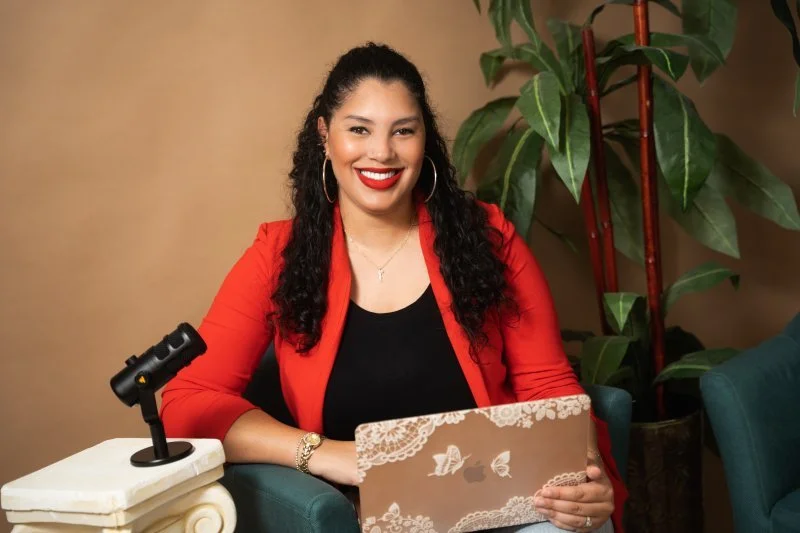
Podcasts and blogs have become two of the most popular platforms for growing an audience and building a business. There are now over 4.7 million podcasts and more than 600 million blogs worldwide. And if you want to know how they compare, you’re in the right place.
You might be wondering: how do you decide if blogging or podcasting is right for you, and what’s the difference? Can you have both a blog and podcast? In this article, I’ll answer these questions to help you learn everything you need to know.
My Blogging and Podcasting Journey
My blogging journey began in 2014 when blogs were already a thing. By then, I was probably late to the game, but I had no idea what I was doing. It started as an online diary for me to share my experiences and have something to read when I got older. But the more I blogged, the more I realized there is more to blogging than just typing and publishing. Same with podcasting!
Podcasts were created in 2004 by Adam Curry and software developer Dave Winer. They launched the program iPodder so people could download audio blogs to their iPods. The first podcast service provider, Libsyn, was born that same year. Like blogging, podcasting didn't become popular until 2014.
My podcasting journey began in 2022 – but unlike blogging, I knew exactly what I wanted to talk about. Immigrant stories. Since starting my podcast, I’ve had incredible opportunities to network with people worldwide and to be a guest speaker at different events and podcasts. And with blogging, I’ve had opportunities to write for other blogs, just like this one. (Thanks, Polly!)
Since I've done both blogging and podcasting, I've noticed their similarities and differences. And there are benefits to blogging and podcasting that I'll share below.

Pin and save for later
Difference Between a Blog and Podcast
The difference between blogging and podcasting comes down to three things: format, engagement, and equipment. Knowing these can help you decide which one fits you best, or if you want to do both.
Format
The main noticeable difference between blogs vs. podcasts is that blogs are written, and podcasts are audio.
With a blog, you publish content, including text and images, on a website. WordPress, Medium, and Squarespace are popular blogging platforms.
On the other hand, podcasts are audio content people listen to instead of reading. They're published or distributed on platforms such as Spotify, Castbox, Apple Podcasts, or Audible – to name a few.
Engagement
When we create content, engagement helps us understand our audience, build connections, and drive results.
With blogs, readers engage by leaving comments directly on your posts, so you’ll want to have this enabled. You can also encourage readers to join your email list or contact you for further engagement.
With podcasts, listeners can email the host, leave comments on the show's social media platform, and add a review to the podcast platform. Spotify also lets listeners leave voice messages and lets hosts create polls, giving both sides more ways to engage.

Spotify for podcasting
Equipment
Equipment is the most significant factor for many choosing between starting a blog or podcast.
For a blog, you need:
Internet connection
A laptop, iPad, or phone
For a podcast, you need:
A microphone
Headphones
A laptop
Audio editing software
A camera (if you want to include video)
How Much Time Does Blogging or Podcasting Take?
Time is another factor to weigh before you start. The average blog post takes 3 hours and 25 minutes to write. That includes writing, editing, and basic formatting, but not extra steps like keyword research or image creation.
Podcasting takes a similar range of time per episode, once you add recording, editing, and publishing. Most podcasters spend 1 to 5 hours per episode, depending on how much editing the audio needs.
Neither format is a quick task. But both get faster with practice, and you don't need to publish daily to see results.
Blog and Podcast Similarities
If you’re considering both podcasting and blogging, the similarities make it simpler. A podcast and blog should be optimized for search engines, can cover any topic, and are easily accessible.
Search engine optimization (SEO)
Optimizing your blog and podcast helps them rank on search engines so your target audience can find them. For SEO, you want to use relevant keywords in your content (title and description for your podcast and title and content for your blog). Keywords should be related to your content and what your ideal listener or reader is searching for.
KeySearch is a great tool for finding keywords relevant to your audience and the topic you want to podcast or blog about.
Flexible topics
However, it's best to focus on one main topic, or niche (a specific subject you become known for), that matters to your target market. For example, my podcast is about immigrant stories, so each episode features an immigrant from a different country sharing their particular story.
Since I coach people on launching their podcasts, my blog is mostly about podcasting. I also turn my podcast episodes into blog posts and share those on my blog – more on this below.
Easily accessible
As of 2026, 73.8% of the global population uses the internet, so podcasts and blogs reach most people with ease. Either option lets you reach a wide audience. Use both, and you connect with even more people."
Which Should You Choose: Blog, Podcast, or Both?
Still deciding between blogging and podcasting? Here's a simple way to break it down.
Choose a blog if you:
Prefer writing over speaking on a recording
Want lower startup costs
Need content readers can search and skim easily
Choose a podcast if you:
Feel comfortable speaking and want to connect through your voice
Want to network with guests and other creators
Have, or are willing to buy, basic recording gear
Choose both if you:
Want to reach people who read and people who listen
Plan to turn one piece of content into the other to save time
Want full ownership over how you reach your audience
There's no wrong choice here. Many creators start with one format and add the other later, once they have a system that works.
Tools You Need to Get Started
For blogging
A website platform like Squarespace or WordPress
A keyword research tool like KeySearch
A clear content plan, so you know what to write about each week
For podcasting
A microphone and headphones
Audio editing software
A hosting platform that distributes your episodes to Spotify, Apple Podcasts, and others
If writing isn't your strong suit, or you don't have time to plan a content calendar, working with a blog writer can take that part off your plate.
Benefits of Having Both a Blog and Podcast
While there are many effective marketing opportunities, blogging and podcasting offer significant benefits. You can reach a wide audience, repurpose content, cross-promote, and own both platforms.
Reach a wide audience
With millions of companies competing for attention, one marketing strategy isn't enough. You need more than one to stand out, reach your target market, and grow a successful business.
Some people like both blogs and podcasts but consume their content differently at various times. When you have the option for both, you can meet your audience where they are.
For example, a business coach might publish a blog post on pricing strategy, then record a podcast episode expanding on the topic with a client story. Readers who prefer text get the blog. Listeners who prefer audio get the episode. Both pieces point back to the same offer.
Repurpose content
When you repurpose content, you can save time and energy. There's no reason to reinvent the wheel when you don't have to.
For example, you can turn blog posts into podcast episodes, or the other way around. To turn a blog post into an episode, record yourself reading it. Then add a few details or backstories to match the podcast's longer, more conversational style.
As I mentioned, I turn my podcast episodes into blog posts. In this episode, my guest mentioned how she had to unlearn certain cultural norms once she moved to the United States, which was the main topic of my article. I linked the episode so my readers could listen, which let me repurpose my podcast content, market my podcast on my blog, and reach a wider audience with SEO.
Cross-promote
Linking my podcast in my blog articles and vice versa, as I mentioned above, is cross-promoting.
If you have a blog or podcast and decide to launch the other, promote each on the other. I link show notes on each podcast episode, which leads to my website. On my blog, I promote and link my podcast episodes where they're relevant.
Own both platforms
With many marketing strategies, like social media, you don’t own the platform, so you’re at the mercy of algorithms and risk losing your content or audience.
With a blog and podcast, you own your space and have more freedom and security. Of course, you need to produce high-quality content to rank for your target audience to find your podcast or blog, but as long as your content is helpful, it can be found.
Best of all, you’re the creative director of both and decide how you’d like to use them or change them in the future.
Common Mistakes to Avoid
A few mistakes tend to slow people down when they start blogging or podcasting:
Skipping keyword research - Without it, your content has a harder time reaching the right audience.
Publishing inconsistently - Random gaps between posts or episodes make it harder to build momentum.
Ignoring SEO basics - Even great content needs the right title, headers, and structure to rank.
Trying to do everything alone - Writing, editing, and promoting content takes time. Outsourcing your content, even for one part of the process, can free you up to focus on your strengths.
Avoiding these early on makes it easier to stay consistent and see results sooner.
Blogging and Podcasting: FAQs
What's the difference between blogging and podcasting?
Blogging means writing content for a website. Podcasting means recording audio content and publishing it on platforms like Spotify or Apple Podcasts. Blogs are read, podcasts are listened to, and each requires different tools to create.
Can you have a blog and podcast at the same time?
Yes, many people do. A common approach is to repurpose content between the two, like turning a blog post into a podcast episode or a podcast episode into a blog post. This saves time while reaching more people.
Which is better for SEO, a blog or a podcast?
Blogs usually have an edge for SEO since search engines can crawl and index written text more easily than audio. If you want your podcast to rank too, publish show notes or a transcript on a webpage.
Do I need a blog if I already have a podcast?
You don't need one, but adding a blog, even just short episode summaries, helps people find your podcast through search. Audio alone is harder for Google to index.
How much does it cost to start a blog vs. a podcast?
A blog costs less upfront since you only need a website and your time. A podcast usually requires a microphone, headphones, and editing software, which adds to the starting cost.
Blog and Podcast: Next Steps
Both blogs and podcasts are effective ways to reach your audience, build trust, and generate leads in 2026 — the right choice (or a combination) just depends on your business and bandwidth.
Ready to move forward?
Hand off your blog - I offer blog writing and management services so you can publish content that ranks — without doing it yourself.
DIY your blog - My SEO blog writing course walks you through the process step by step.
Start a podcast - Heidy De La Cruz offers podcast services to help you launch and grow your show.